LUXBAT
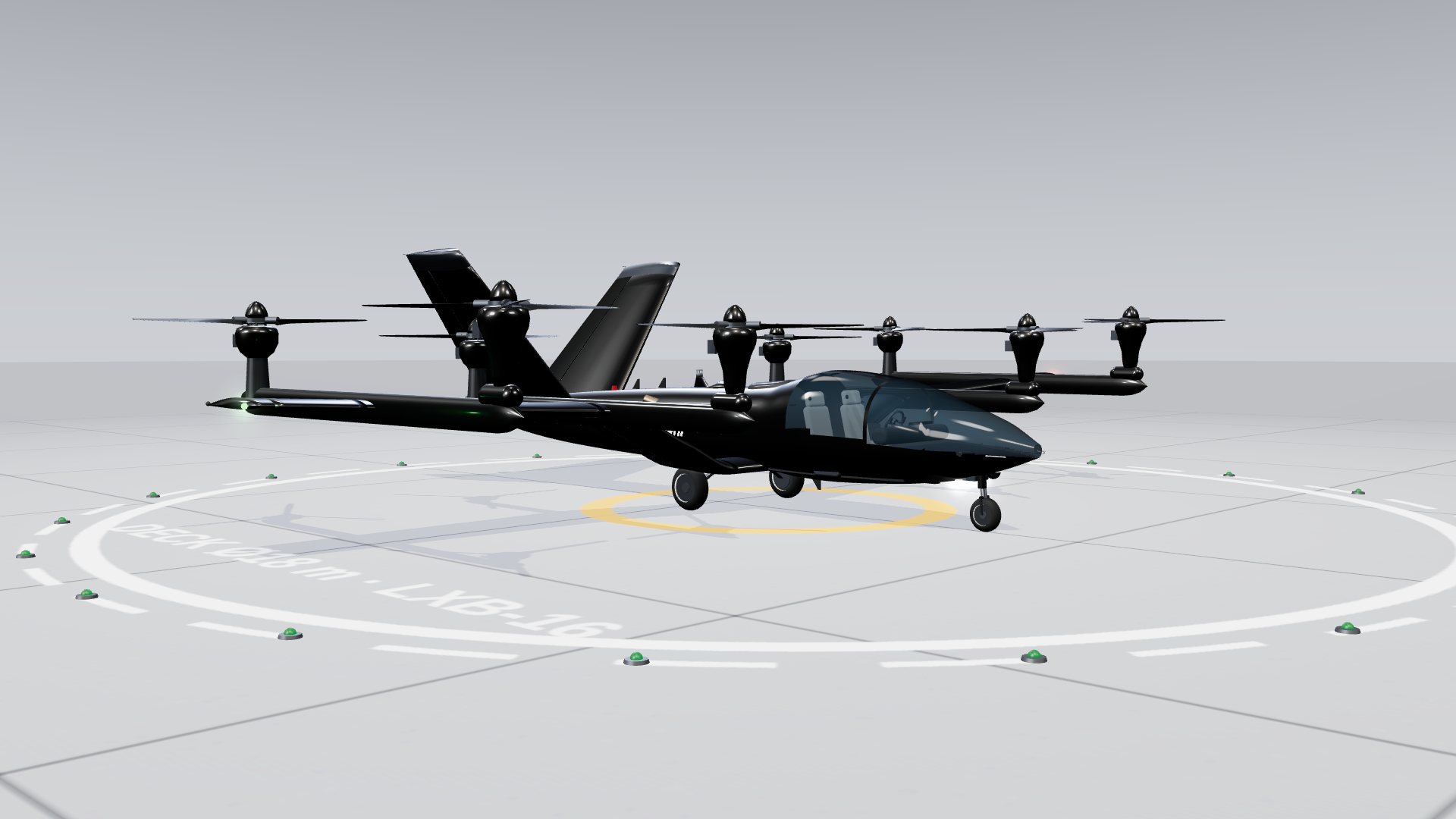
A two-seat hybrid-electric tiltrotor for door-to-door trips of up to 1,000 km, from places no airplane can use.
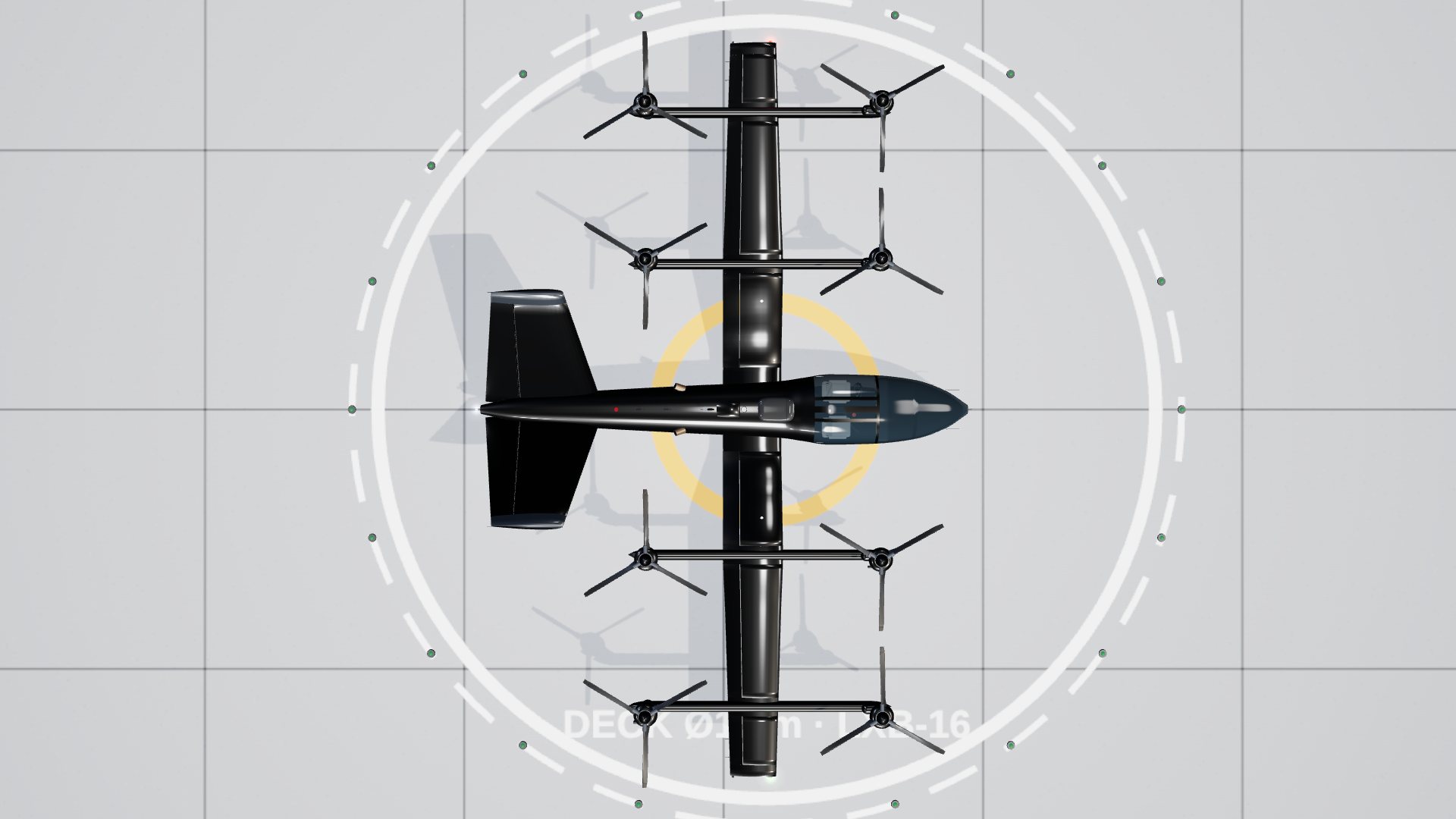
- Seats
- 2
- Layout
- Tiltrotor, 8 rotors
- Wingspan
- 16.0 m
- Rotor diameter
- 3.0 m
- Cruise speed
- 280 km/h
- Design range
- 1,000 km
- Power
- Turbine generator and battery
- Charging
- Plug-in, on the pad
- Runway needed
- None
- Flight control
- Triple-redundant fly-by-wire
- Connectivity
- Satellite internet
- Finish
- Solar-reflective black
LUXBAT is in design. These figures come from our integrated design model and will change as we build and test.
The simulator's automatic demo flight: lift-off, climb-out and the start of the transition to cruise, at three times speed.
Flown in simulation.
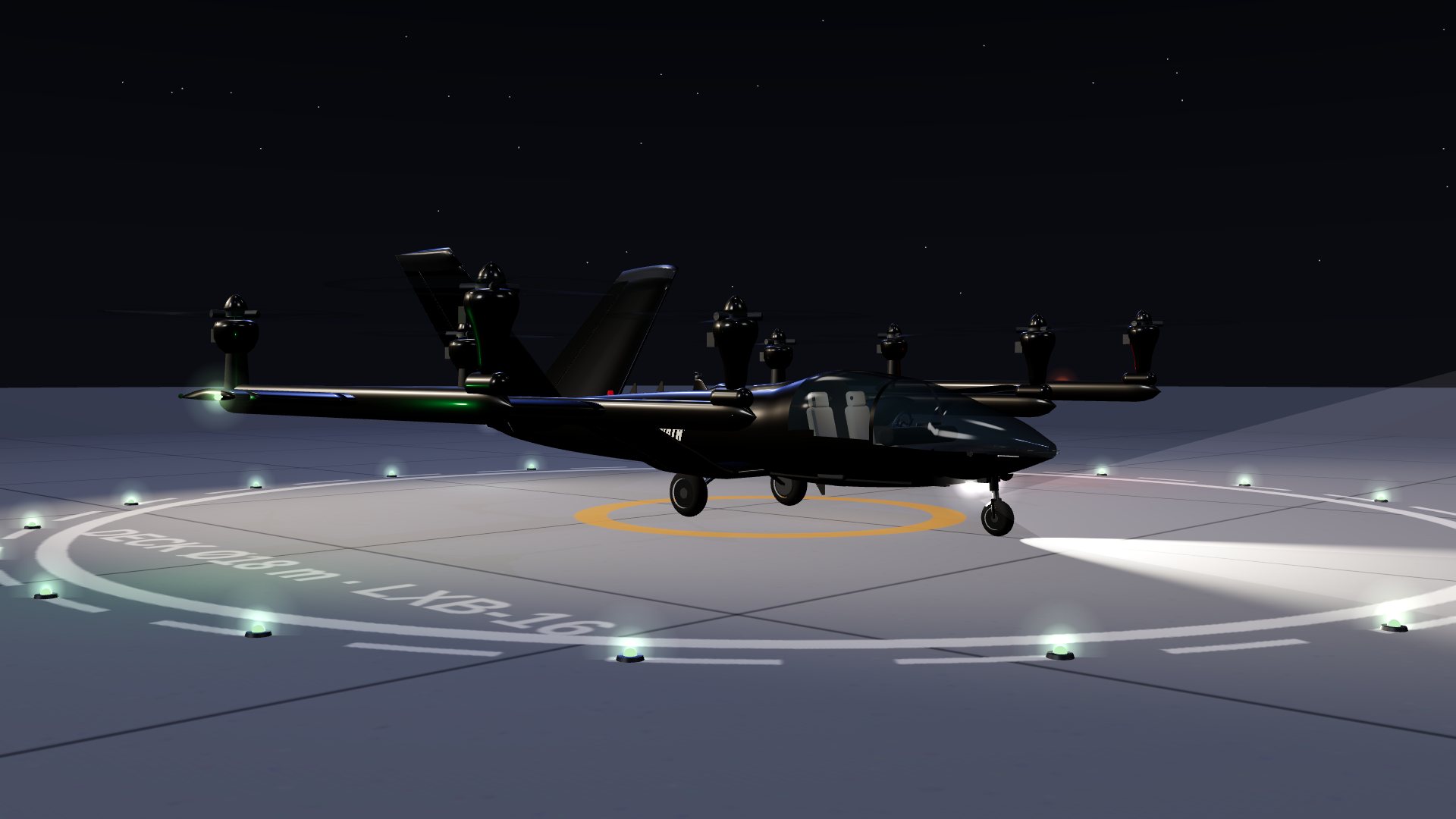
LUXBAT already flies in our flight simulator, built from the same design model as every figure on this page. The simulator runs the flight-control laws we intend to fly, and every design change is checked against a campaign of simulated flights, including rotor, engine and sensor failures.
Drives like a car.
There is no stick and no collective. You steer with a wheel, set speed with the accelerator and brake, and climb or descend with paddles behind the wheel.
Three independent flight computers turn those inputs into rotor and wing commands, and every air-data sensor is duplicated so no single sensor failure leaves the aircraft without speed or altitude.
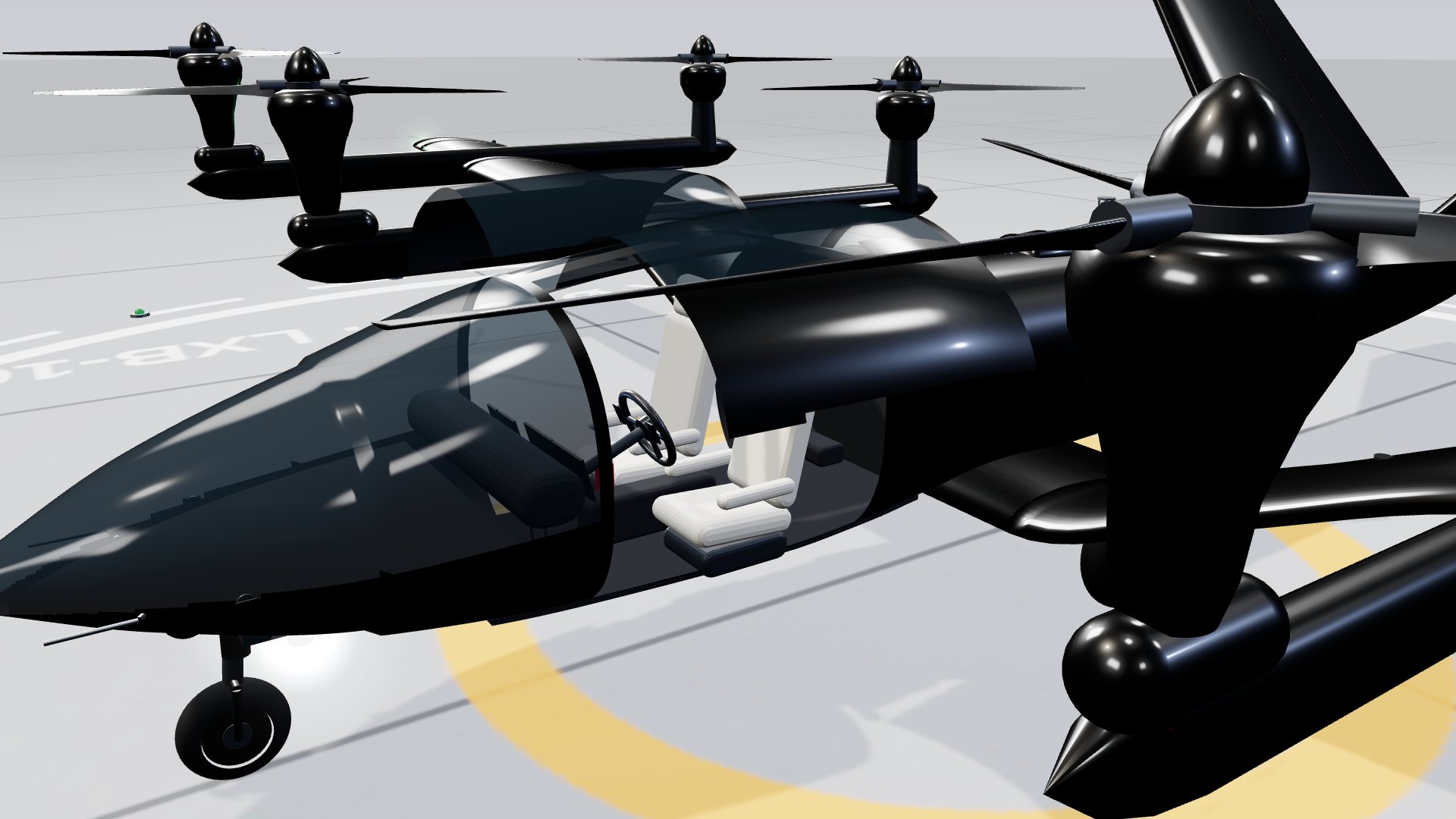
Gull-wing doors open from the roof spine, and the glass roof runs above both seats.
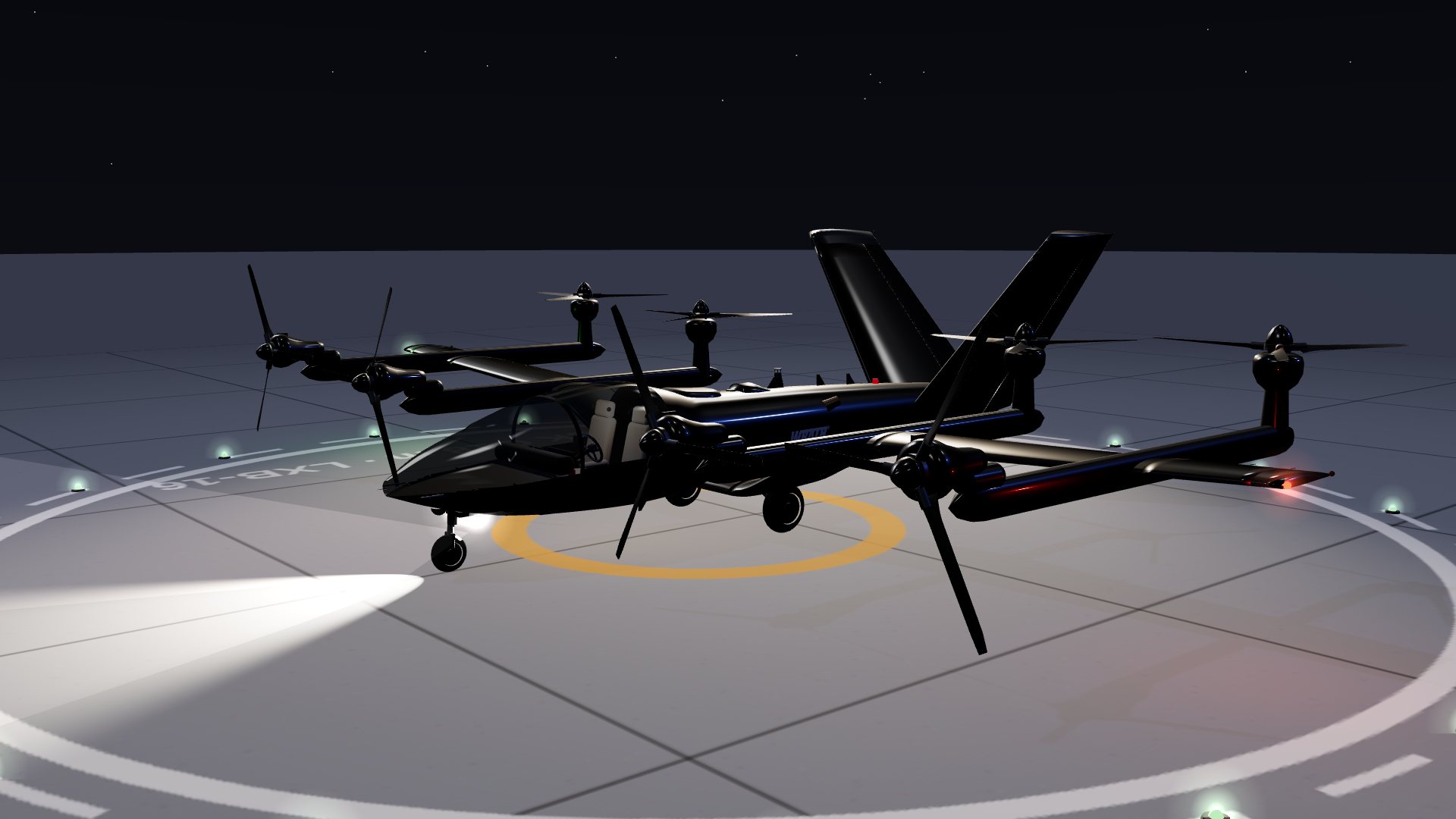
Cruise configuration: front rotors forward, rear lift rotors stopped.
Goes where the infrastructure isn't.
An onboard turbine generator and a battery share the work, so LUXBAT flies on ordinary jet fuel and needs no charging network to reach its range. Where there is a plug, it charges on the pad without running the turbine.
It carries its own battery cooling and fuel-tank inerting, so it needs no ground carts and can operate from a remote site with nothing there.
From the design model.